Soft Materials Research Lab- Undergraduate Research
Project Overview
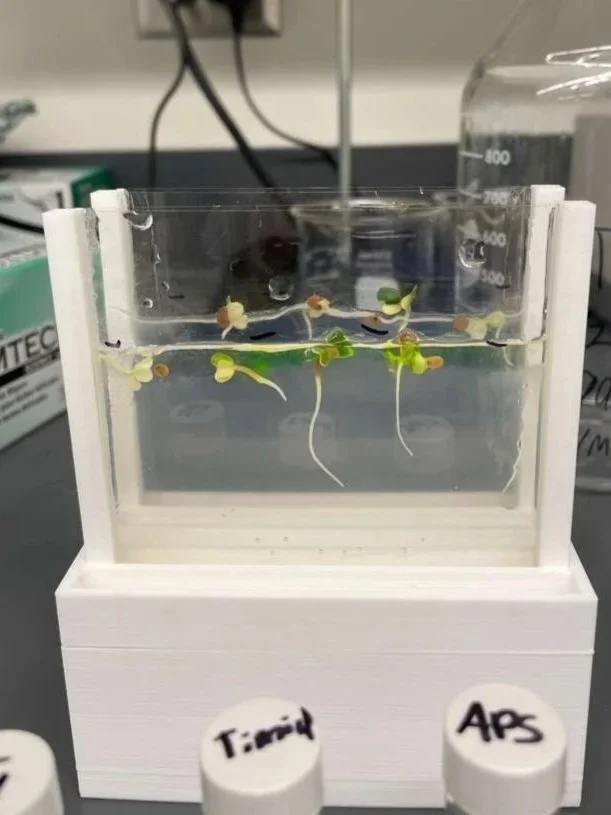
As part of the Soft Materials Research Laboratory at the University of Missouri, I worked on developing a platform that allowed plant roots to be observed as they grew through transparent granular soil.
The project combined CAD, 3D printing, microscopy, and image analysis. The main goal was to study the roots without removing them from their growing environment, allowing changes in growth and structure to be recorded in real time.
Rhizotron Design
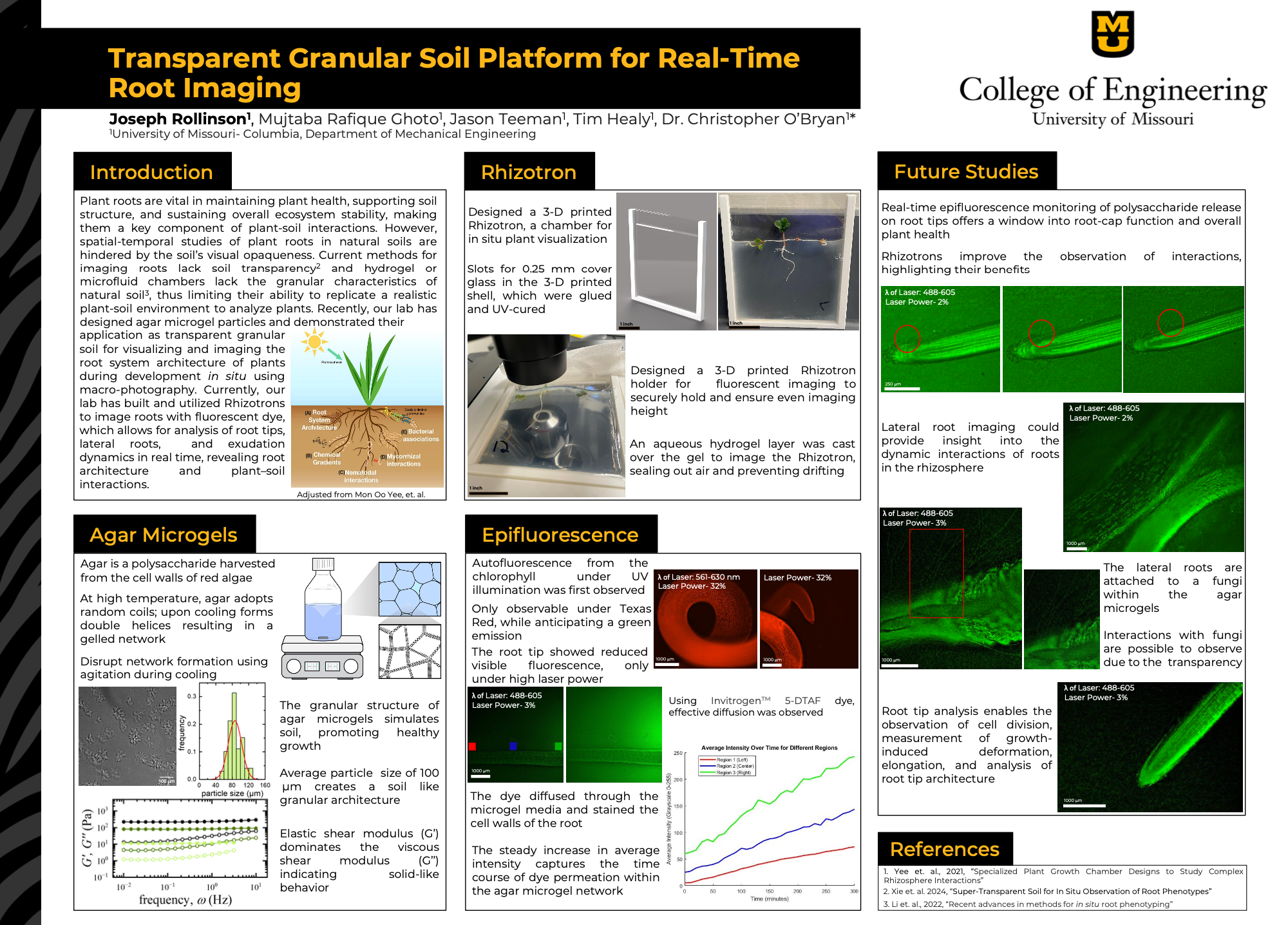
I designed and 3D-printed a rhizotron that held the roots inside a thin, transparent chamber. This encouraged the roots to grow close to the viewing surface, making them easier to image.
The design used glass sheets secured inside a printed outer frame. I also created a separate holder that positioned the rhizotron consistently beneath the microscope and reduced movement during time-lapse imaging.
Microscopy and Root Imaging
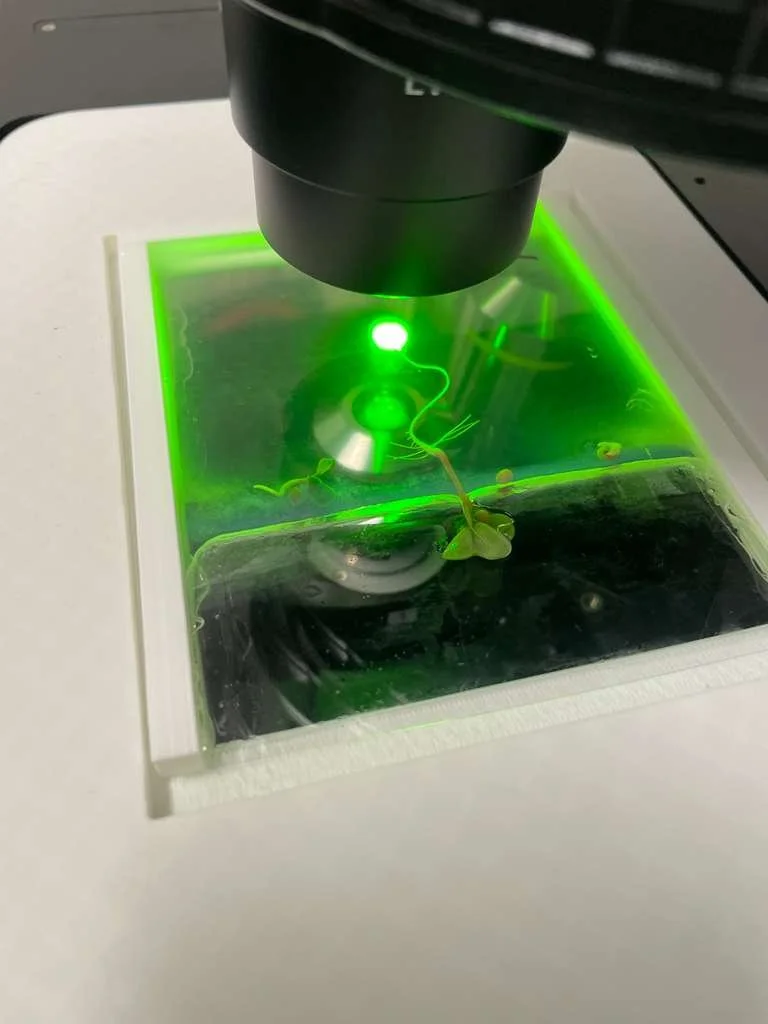
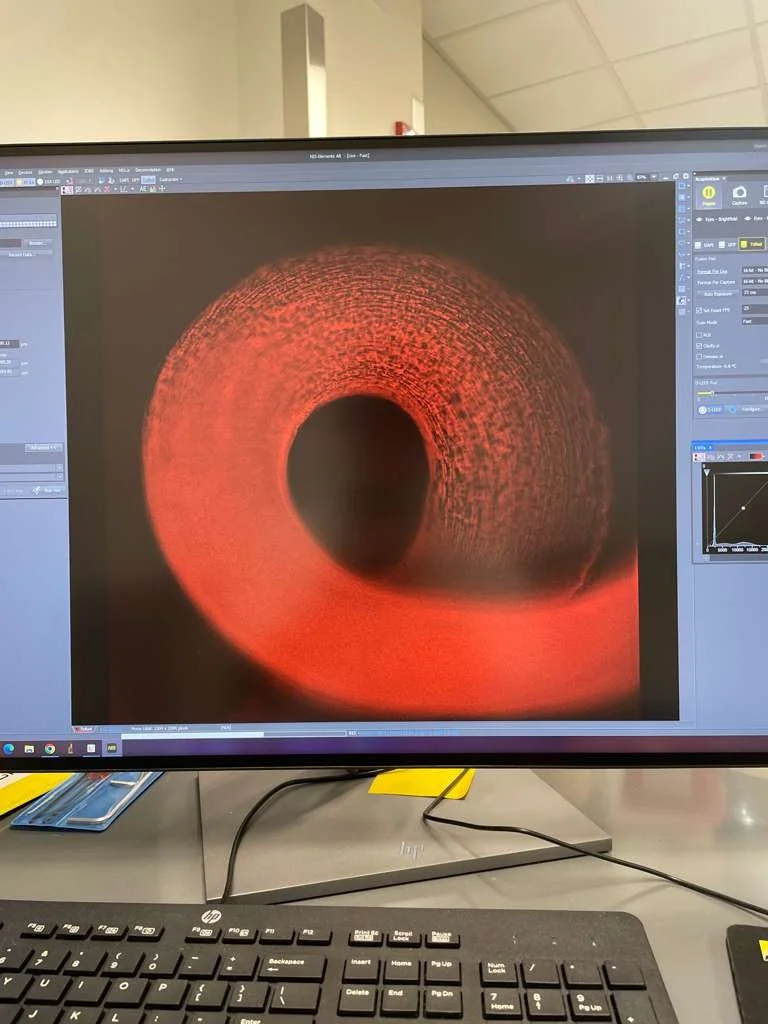
I prepared the rhizotron for imaging and analyzed the roots using an inverted epifluorescence microscope. This allowed me to examine root tips, lateral roots, cell structures, and interactions within the transparent agar microgel environment.
I applied fluorescent dye that diffused through the microgel media and stained the root cell walls. I then recorded images and time-lapses to observe how the dye moved through the system and how the roots developed over time.
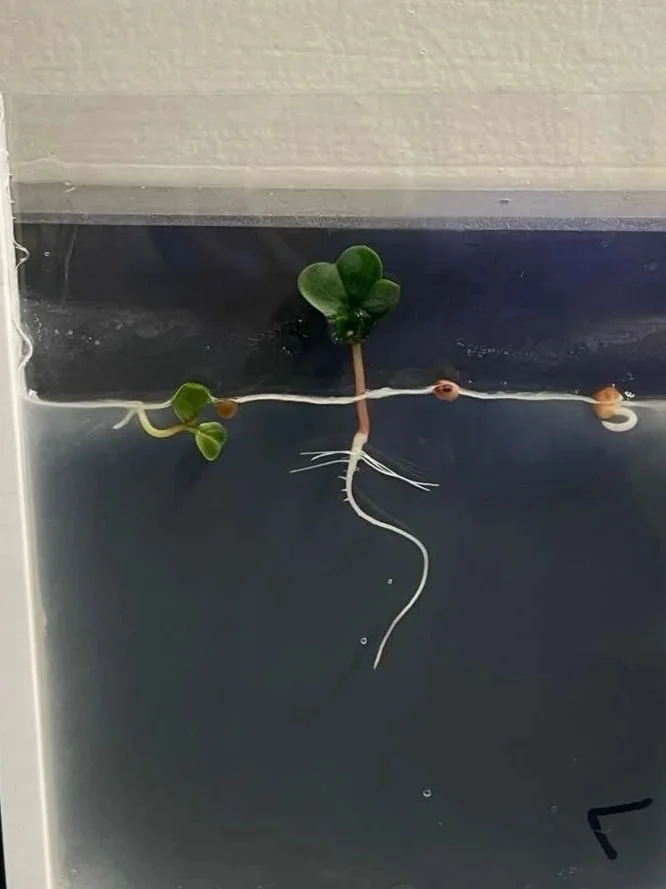
The completed platform enabled continuous, non-destructive observation of plant roots inside a soil-like granular material. It provided a clearer way to study root growth, cell development, and potential root–microbe interactions in real time. The research continues, and my work set the groundwork for future studies of roots like never before.
What I Learned
This project showed me how mechanical design can be used to support biological research. The rhizotron needed to be simple to manufacture, easy to assemble, and accurate enough to remain in the same position during repeated imaging.
I also gained experience developing prototypes through multiple design changes and working with experimental results that were not always predictable. It taught me the importance of controlling the test setup and making the design repeatable before collecting data.
Project Outcome
The completed platform enabled continuous observation of plant roots within a transparent, soil-like material without removing or damaging them.
My work contributed to the research poster shown above and provided a platform for further studies of root growth and root–microbe interactions. Eventually leading towards a publication.
Skills and Software
Design and Manufacturing
CAD Design | 3D Printing | Prototype Development
Research and Testing
Experimental Testing | Sample Preparation | Time-Lapse Imaging
Imaging and Analysis
Epifluorescence Microscopy | Image Analysis | MATLAB