
MSc Dissertation: Active Suspension Design
Design, simulation, and packaging study for an active suspension system
My Role
This is an individual MSc dissertation completed in collaboration with an industry partner, The Landrovers.
My responsibilities include:
Defining the suspension system requirements and evaluation criteria
Reviewing active and semi-active suspension technologies
Comparing suppliers and actuator concepts using a weighted decision matrix
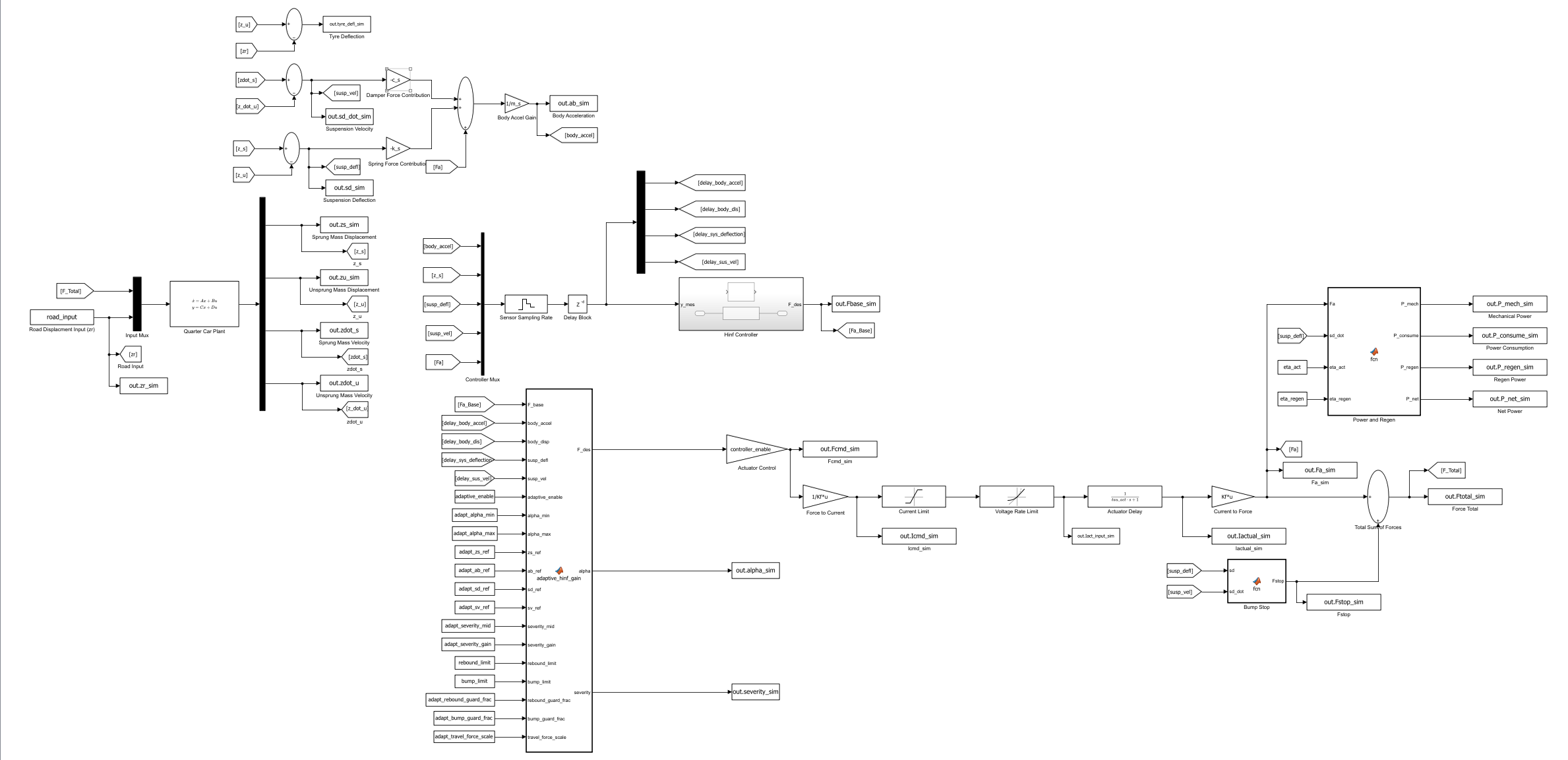
Developing and validating passive and active quarter-car models
Designing an LQR-based suspension controller
Assessing ride comfort, body acceleration, suspension travel and actuator demand
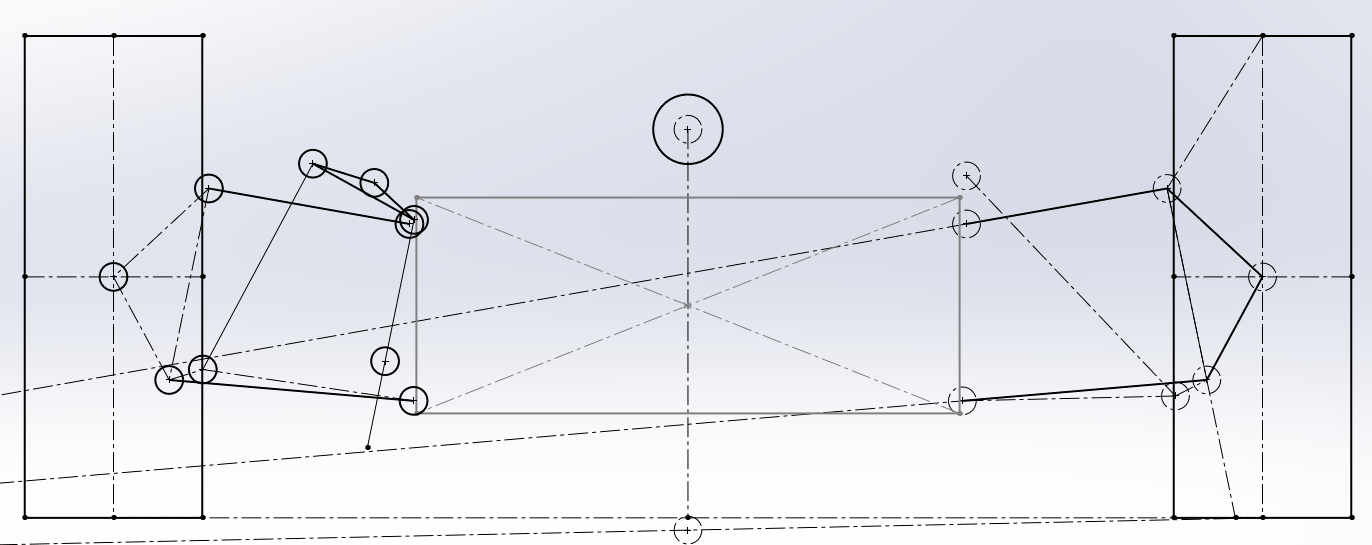
Developing the suspension packaging and rocker geometry in SolidWorks
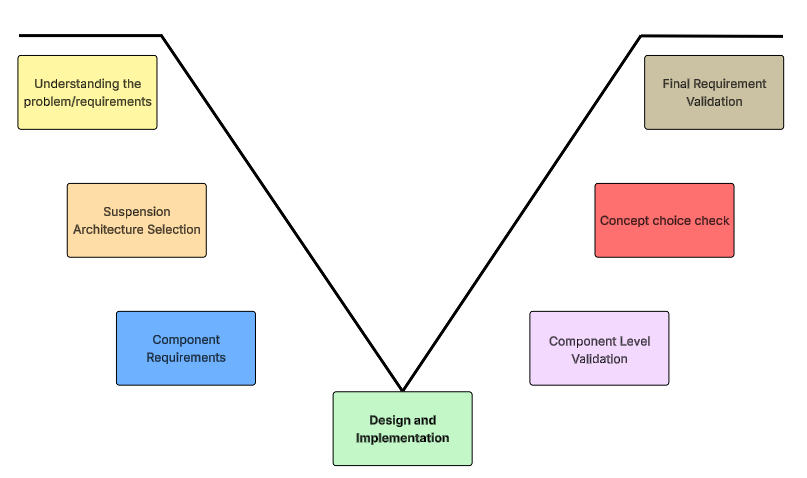
Planning the verification and validation process using a V-cycle methodology
Project Overview
My MSc dissertation focuses on the development and evaluation of an active suspension concept for a prototype vehicle platform. The project investigates how active and semi-active suspension technologies can improve ride comfort, body control, and overall vehicle refinement while remaining realistic in terms of packaging, power demand, actuator capability, and manufacturability.
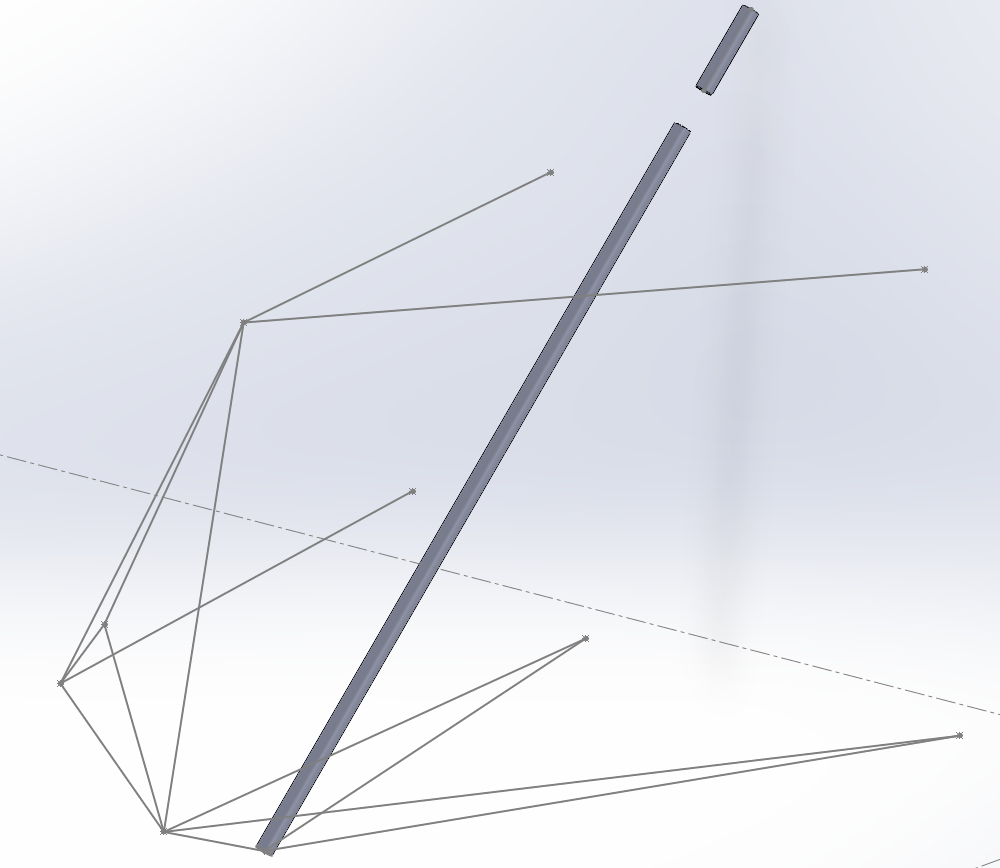
The work covers the complete early-stage engineering process, including system requirement definition, suspension technology research, supplier benchmarking, quarter-car modeling, controller development, and mechanical packaging. MATLAB and Simulink are being used to compare passive and active suspension behavior, while SolidWorks is being used to develop a rocker-and-pushrod arrangement capable of integrating the actuator within the available vehicle envelope.
The final objective is to produce a validated concept supported by simulation results, packaging studies, and a clear engineering justification for the selected suspension architecture.
Project Objectives
The project has five principal objectives:
To review existing fully active and semi-active suspension systems
To define the key design requirements and constraints for integrating the suspension
To develop and compare at least two viable suspension concepts
To select and refine the most suitable suspension concept
To package the selected suspension concept and redefine the suspension points
To evaluate the final design as a prototype-level concept for future development
The concept must also account for actuator stroke, suspension travel, response time, thermal operating conditions, power demand, reliability, cost and low-volume manufacturability.
Engineering Methodology
The project follows a V-cycle development process, connecting each design activity with a corresponding verification or validation stage.
The left side of the process defines the problem through literature research, requirement capture, concept generation, and system modeling. The design is then developed through controller tuning, actuator selection, and CAD packaging.
The right side verifies whether the proposed system satisfies the original requirements. This includes model validation, controller performance assessment, motion-ratio studies, actuator stroke checks, packaging reviews, and comparison against the passive suspension baseline.
Simulation and Control
A passive quarter-car model was developed from the suspension equations of motion using MATLAB and Simulink. The model represents the sprung mass, unsprung mass, suspension spring and damper, tire stiffness, and road input.
The passive model was independently recreated in Excel, and the time-domain responses were compared. This provided an initial validation step before introducing active control and helped identify differences caused by solver settings, time-step handling, and model implementation.
An active suspension model was then developed by introducing a controllable actuator force between the sprung and unsprung masses. A Linear Quadratic Regulator (LQR) controller was selected as the initial control method because it provides a structured way of balancing multiple competing outputs.
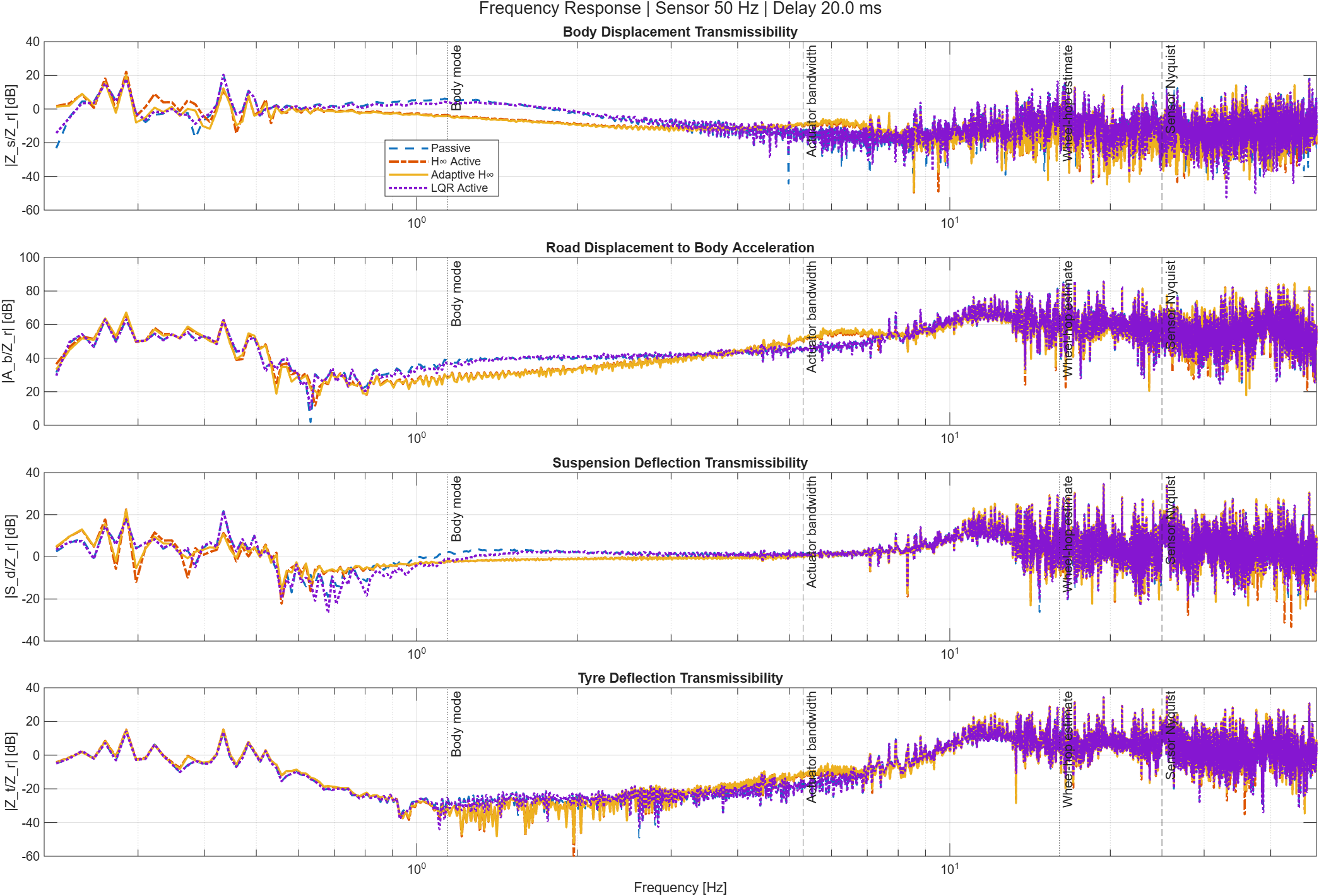
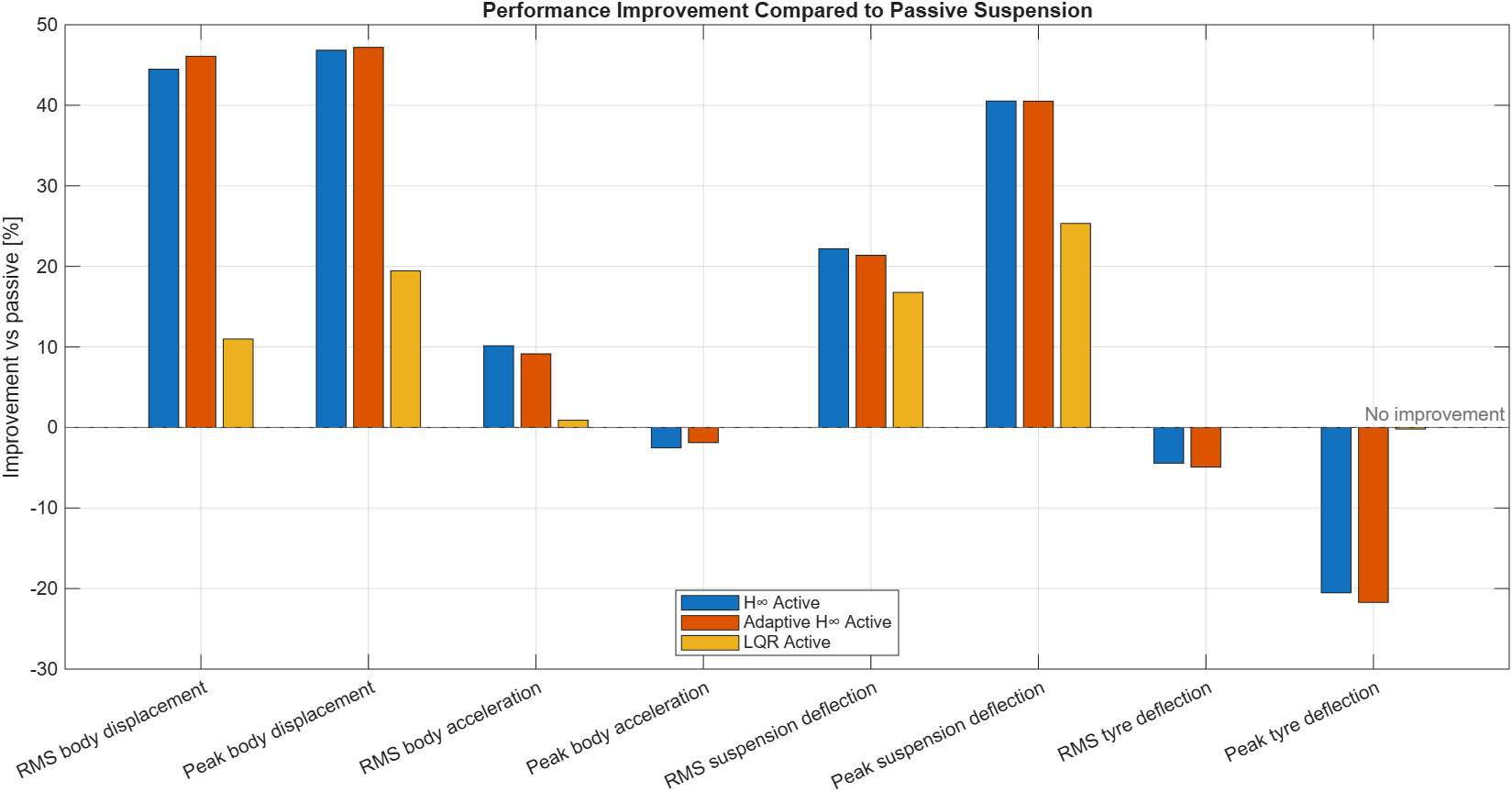
The control system was subsequently expanded by developing an H∞ controller designed to improve robustness to disturbances and model uncertainty. An adaptive H∞ controller was then introduced to adjust its response as operating conditions changed. The three control strategies were evaluated against the passive suspension using body displacement, body acceleration, suspension deflection, tire deflection, and frequency-response results, as shown below.
Each controller will be evaluated against a chirp input, ISO road input with varying levels of road: A, B, C, and D, single bump, multi bump, and curb strikes.
Current Progress
Work completed so far includes:
Active and semi-active suspension literature review
System requirement definition
Supplier and technology comparison
Passive quarter-car model validation
Quarter-car model with three controller methods
LQR controller
H inf controller
H inf adaptive controller
CAD motion ratio study for 2-D and 3-D being conducted
The next stage is to continue controller optimization, develop the 3D packaging model, and select a final option for the prototype.
Software and Skills
Modelling and Control
MATLAB | Simulink | State-Space Modelling | LQR Control | Frequency-Response Analysis
Mechanical Design
SolidWorks | Suspension Kinematics | Motion Studies | CAD Packaging | Rocker Geometry
Engineering Analysis
Vehicle Dynamics | Ride Comfort | Active Suspension | Requirement Definition | Model Validation
Project Development
Supplier Benchmarking | Weighted Decision Matrices | V-Cycle Development | Technical Research | System Integration